
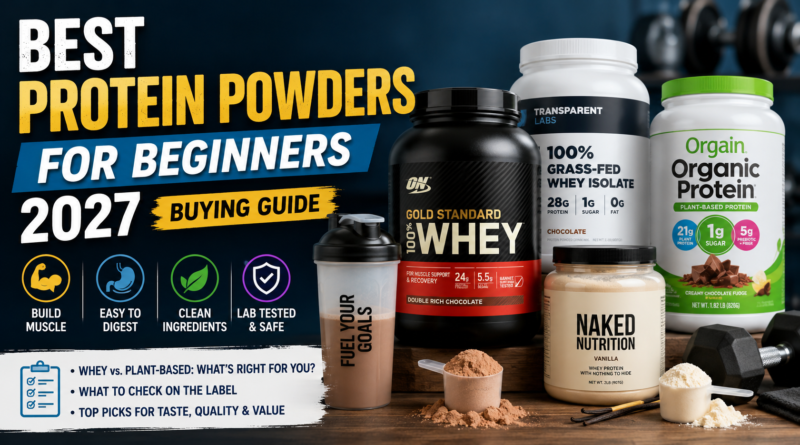
Best Protein Powders for Beginners (2026 Buying Guide)
Stepping into the protein powder aisle for the first time is like being on an alien planet. There are so many types of protein powders available like whey powder, isolate protein powder, hydrolysate protein powder, casein protein powder, vegetable protein powder blends, bulk gainers and “lean” proteins. This only scratches the surface before taking a look at the products. That’s why many new consumers simply choose the one that looks the coolest from the outside.
Here’s what you should remember: the best protein powder is the one you will actually be able to take. A beginner who drinks any protein shake, however simple it may be will always do better than someone who purchased pricey isolate protein powder but won’t like its taste. The aim of this guide is to help beginners find lactose-free protein powders according to the most important factors for such consumers (taste, digestibility, transparency, and price).
This content is intended for informational purposes only but should not be regarded as a personalized piece of advice provided by a physician or registered dietitian.
Whey vs. Plant-Based: The First Decision
Before individual product picks, there’s one fork in the road every beginner hits.
Whey is referred to as a complete food due to the presence of all 9 essential amino acids. Whey protein not only gets digested quickly; there is ample scientific evidence supporting its muscle-growth benefits. Given that whey protein originates from milk, it cannot be consumed by people who are vegans, lactose intolerant, or have a dairy allergy.
Plant-based protein typically blends multiple sources — pea, rice, soy, hemp — to achieve a complete amino acid profile, since most single plant sources fall short on their own (soy is a notable exception, as it’s complete by itself). Research suggests well-formulated plant blends support muscle growth about as effectively as whey, and they’re the clear choice for anyone who reacts poorly to dairy, since it removes the digestion question entirely instead of forcing a beginner to test tolerance one shake at a time.
Simple rule: if dairy has ever bloated you, given you stomach discomfort, or you’re vegan, skip straight to a plant-based blend. Otherwise, whey remains the more proven, usually cheaper, default starting point.
What to Actually Check on the Label
A few checks that matter far more than flavor marketing:
- Protein per serving: most quality powders deliver somewhere in the 20–30g range per scoop. Research on muscle-building generally points to at least 20g of high-quality protein per serving as a reasonable target.
- Ingredient list length: shorter is usually better. A long list of fillers, gums, and artificial thickeners is a sign of a lower-quality product padding out the tub.
- No hidden “proprietary blends.” If a label lists one combined gram count for a mix of protein sources instead of breaking each one out individually, you genuinely can’t tell how much of the primary protein you’re actually getting.
- Third-party testing. After heavy-metal contamination reports surfaced across a wide swath of the protein powder market in 2025 — with independent testing finding a notable share of products exceeding recommended thresholds for lead and cadmium — third-party certification (NSF Certified for Sport, Informed Choice, USDA Organic) has become the single most important buying signal, more than taste or brand recognition.
- Carb and sugar content, especially if you’re not specifically trying to bulk. Some tubs marketed loosely at “beginners” are actually weight-gainer formulas carrying 40–60g of carbs per serving — fine if that’s your goal, a problem if you’re just trying to hit a protein target without excess calories.
The Best Protein Powders for Beginners in 2027
- Optimum Nutrition Gold Standard 100% Whey — Best Overall for Beginners
The Gold Standard is the oldest and the most popular protein powder available for first-timers. The formula is renowned for its timeless nature and excellent consumer reviews. This protein powder blends well, tastes great, and contains ample protein per scoop taken. It contains three different types of whey proteins – whey isolate, whey concentrate, and hydrolyzed whey. Here is the reason why we believe it is the best for newbies – Gold Standard may not be the best and the most progressive powder on this list, but it gets the job done at an affordable price. Moreover, the product meets Informed Choice standards, thus removing the worries about third-party testing.
Best for: : The first-time buyers of protein powder..
- Transparent Labs Whey Protein Isolate — Best Clean-Label Option
Transparent Labs is known for offering complete clarity in terms of contents of its products, meaning there is no place for unnatural or fillers products among its ingredients. If you want to start using a vegan protein powder, there is no better option than Transparent Labs since it is the cleanest one.
The tradeoff: it sits at a higher price point than Gold Standard, which matters if you’re still deciding whether protein powder is a habit you’ll stick with.
Best for: beginners who want to start with a premium, minimal-ingredient product rather than trade up to one later.
- Garden of Life Sport Organic Plant-Based Protein — Best Plant-Based Pick
This one of the popularly known plant proteins. There are various types of certifications on the label including NSF Certification for sport, USDA Organic certification and Non-GMO Project Verified. It is rare for a plant protein to possess these certifications. This protein powder has the ability to deliver ideal protein concentration of every scoop. Its ingredients include peas, garbanzo beans, navy beans, lentils and cranberry seed proteins such that the amino acid composition is complete and dairy free.
Best for: vegans, people who are sensitive to dairy and people who are beginners and desire the third-party certification for this plant protein.
- Naked Whey — Best Minimalist / Unflavored Option
The major claim of Naked Whey is simplicity: just pure whey as its only ingredient. There is no artificial sweetener or flavoring present. It is free of fillers and provides protein that can be mixed with anything a person is consuming—be it smoothies or oatmeal or coffee.
The tradeoff: if you’re expecting a dessert-like flavored shake, this isn’t it. It’s built for people who want maximum control over what goes into their body and don’t mind a plain taste.
Best for: beginners who want the absolute simplest possible ingredient list and plan to blend it into other foods rather than drink it as a standalone shake.
- Orgain Organic Protein — Best Budget Plant-Based Option
Orgain has built a reputation as the accessible, everyday choice in the plant-based category — widely available, reasonably priced, and organic-certified, without the premium price tag of some sport-certified competitors.
Best for: beginners who want a plant-based option but are prioritizing price and easy availability (most grocery stores carry it) over maximum certification depth.
- Gainful Custom Protein — Best for Beginners Who Aren’t Sure What They Want Yet
Gainful takes a different approach entirely — instead of picking a pre-made formula, you answer questions about your goals, diet, and taste preferences, and it builds a custom protein blend around that. For a true beginner who feels overwhelmed by the whey-vs-plant, flavor, and brand decision all at once, this removes a lot of that decision fatigue.
Best for: beginners who’d rather answer a short quiz than research ingredient panels themselves.
| Protein Powder | Best For | Protein/Serving | Type |
|---|---|---|---|
| Optimum Nutrition Gold Standard | Best overall beginner pick | ~24g | Whey blend |
| Transparent Labs Whey Isolate | Cleanest label | ~28g | Whey isolate |
| Garden of Life Sport | Best plant-based, most certified | ~30g | Plant blend |
| Naked Whey | Simplest ingredient list | ~25g | Whey concentrate |
| Orgain Organic | Budget plant-based | ~21g | Plant blend |
| Gainful | Best for total beginners, custom-built | Varies | Whey or plant |
Protein-per-serving figures are approximate and reflect standard manufacturer labeling — always check the current label, since formulations occasionally change.
How Much Should You Actually Expect to Pay?
Run this math before comparing tubs: divide total price by number of servings, not by tub size. A cheaper-looking tub with fewer, larger servings can easily cost more per serving than a pricier tub with more standard-sized scoops. A typical 40-serving tub, used once daily, lasts about 40 days — worth calculating your realistic cost-per-month before committing to a brand.
Most reputable beginner-friendly options run somewhere in the $1–$2.50 per serving range depending on brand, certification level, and whether it’s whey or plant-based (plant blends often run slightly higher).
Common Mistakes Beginners Make
- Buying the cheapest tub without checking ingredients. A rock-bottom price per scoop often means the protein content is stretched with fillers like maltodextrin or gums — cheaper isn’t automatically better value once you account for actual protein delivered.
- Ignoring third-party testing entirely. Given the heavy-metal contamination findings across parts of the market in 2025, checking for a certification like NSF Certified for Sport or Informed Choice is no longer optional due diligence — it’s a basic buying step.
- Grabbing a weight-gainer tub by mistake. Some products marketed loosely as beginner-friendly are actually mass gainers carrying significant added carbs — fine for aggressive bulking, unnecessary calories for most everyone else.
- Choosing based on taste hype alone and skipping the ingredient panel. A great-tasting shake padded with fillers and artificial sweeteners isn’t a better choice than a slightly plainer one with a clean label.
- Assuming you need protein powder at all. For many people already eating enough protein through food, a powder is a convenience, not a requirement — it fills a gap, not a health necessity.
Frequently Asked Questions
Is protein powder actually necessary, or can I get enough protein from food?
Most individuals can legitimately rely on whole foods to reach their protein needs without involving the powder, as it serves more as a convenient and easily measurable option rather than a necessity. Nevertheless, it may be beneficial for those who cannot meet their protein requirement only through food due to being in a hurry or having no appetite because they either work out a lot or follow a strict diet.
Is whey or plant-based protein better for building muscle?
Research seems to indicate that both types of protein can be beneficial in terms of muscle growth when they contain sufficient amino acids and protein. Whey seems to be considered superior in some studies primarily because of its leucine composition, but, all in all, the existence of such difference won’t matter much for an average beginning athlete.
How do I know if a protein powder is safe from heavy metal contamination?
Please look for certifications from a third party; it should have something along the lines of NSF Certified for Sport, InformedChoice and USDA Organic on its label. Such certifications require third-party verification of the findings rather than just relying on what manufacturers have to say. They thus represent a good key market indicator of safety.
Should beginners buy flavored or unflavored protein powder?
Flavored protein seems to have an edge over unflavored one because with flavored protein its user will be more likely to finish the container before it goes bad.
Do I need to talk to a doctor before starting a protein supplement?
In the majority of cases, normal protein consumption should pose a low nonhealth danger, but you may want to consult your physician if you have any medical problems that may be impacted by protein consumption.
Conclusion
There is no one “best” protein powder—there is only one that fits your dietary needs, tastes good enough for you to want to keep using it, and comes from a reputable brand that has credible third-party testing backing their claims. You can start off with tapering your choice to decent but not complicated options such as Gold Standard Whey or plant-based protein powder by Garden of Life. Always check other ingredients in protein powder before you commit to any. Remember that consistency and continuing taking protein powder you thought was just okay is much more important than having the best one ever but not being able to continue with its taking as you just don’t want it at all.
So, ready to buy your protein powder? Don’t forget to check our recommendations before making any decision.