
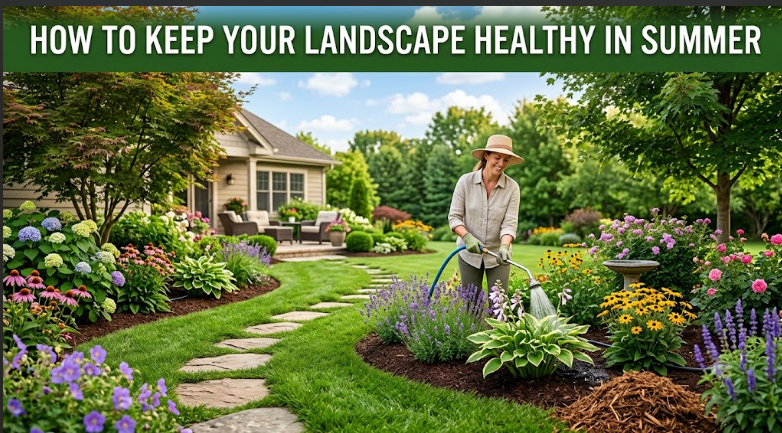
How to Keep Your Landscape Healthy in Summer
Summer can be one of the hardest seasons on a landscape. High temperatures, strong sun, dry soil, and increased water demand can quickly stress lawns, trees, shrubs, and garden beds. A yard that looks healthy in spring can start showing brown grass, wilted plants, and dry soil within a few hot weeks.
Keeping your landscape healthy through summer is less about doing more work and more about doing the right work at the right time. Watering deeply, mowing properly, protecting soil, and watching for stress can make a noticeable difference. A few changes to your summer routine can help plants stay stronger until cooler weather returns.
Water Deeply Instead of Watering a Little Every Day
Frequent shallow watering often creates shallow roots. Grass and plants become more dependent on constant irrigation and can struggle when temperatures rise.
A better method is to water deeply enough for moisture to reach farther into the soil. Deeper watering encourages roots to grow downward, where soil usually stays cooler and holds moisture longer.
For homeowners working with highlands landscaping, summer irrigation planning often starts with checking how water is actually moving through the property. Slopes, compacted soil, sprinkler coverage, shade, and plant type can all affect how much water a particular area needs.
Check the soil rather than relying only on a timer. Push a screwdriver or soil probe several inches into the ground after watering. If the soil remains dry below the surface, the watering cycle may be too short.
Water During the Cooler Part of the Day
Early morning is usually the best time to irrigate a landscape. Temperatures are cooler, wind is often lighter, and plants have time to absorb moisture before the hottest part of the day.
Midday watering can lose more water to evaporation. Evening watering can leave foliage wet overnight, which may create conditions that support certain plant diseases.
This does not mean you should ignore a severely wilted plant until morning. A plant showing extreme heat stress may need immediate water. For routine irrigation, though, morning watering is usually the most practical choice.
Sprinklers should also be checked for overspray. Water landing on sidewalks, driveways, fences, or streets is not helping the landscape and can waste a large amount over the course of summer.
Raise Your Mowing Height
Cutting grass too short can make a summer lawn more vulnerable to heat and drought. Taller grass shades the soil and helps reduce moisture loss.
The right mowing height varies by grass species, but removing too much of the blade at once can cause stress. A useful rule is to avoid cutting away more than about one-third of the grass blade during a single mowing.
Sharp mower blades matter too. Dull blades tear grass rather than cutting it cleanly. Torn grass can develop brown tips and may lose moisture more quickly.
If growth slows during very hot weather, reduce mowing frequency rather than forcing the lawn into the same schedule used during spring.
Watch for Signs of Heat Stress
Plants usually show signs before serious damage occurs. Leaves may droop, curl, fade, develop brown edges, or drop earlier than expected.
Lawns can develop a dull blue-green color before turning brown. Grass that stays flattened after you walk across it can be another sign that it needs water.
Do not automatically respond by flooding the area. Heat stress can look similar to problems caused by poor drainage, root damage, compacted soil, disease, or sprinkler issues.
Check the soil first. If it is already wet, adding more water may make the problem worse.
Use Mulch to Protect Soil
Mulch helps soil hold moisture and protects plant roots from extreme temperature swings. It can also reduce weed growth, which means less competition for water.
Apply mulch around trees, shrubs, and garden beds where it makes sense. Keep the layer deep enough to cover the soil without piling it excessively.
Avoid creating large mulch mounds against tree trunks. Mulch should not stay packed tightly against bark. Too much material around the trunk can trap moisture and contribute to decay.
Organic mulch can also break down over time and contribute material back to the soil. Check existing mulch before adding more so beds do not become overloaded.
Pay Attention to Trees and Shrubs
Established trees may need less frequent watering than lawns, but prolonged heat and dry conditions can still cause stress. Newly planted trees and shrubs usually need closer attention since their root systems are still developing.
Water the root zone rather than concentrating everything directly against the trunk. Tree roots extend outward, often much farther than homeowners expect.
Look for wilting leaves, premature leaf drop, scorched edges, cracked soil, and branch dieback. These signs can point to drought stress, though insects and disease can create similar symptoms.
Young plants need extra monitoring after installation. A new shrub can dry out quickly during a hot week even when nearby established plants look healthy.
Control Weeds Before They Compete for Water
Weeds compete with desirable plants for water, nutrients, sunlight, and space. That competition becomes more noticeable during periods of heat and limited moisture.
Pull weeds when they are young and before they produce seed. Small weeds are usually easier to remove and less likely to have developed large root systems.
Mulch can help reduce new weed growth in planting beds. Dense, healthy turf can also make it harder for many weeds to become established in lawns.
Avoid aggressive weed treatments during extreme heat unless the product label supports those conditions. Stressed plants may react differently during very hot weather.
Check Your Irrigation System Regularly
An irrigation system can appear to be working while leaving parts of the landscape dry. A broken sprinkler head, clogged nozzle, poor adjustment, or leak can create large differences in coverage.
Run each irrigation zone and watch what happens. Look for sprinklers that do not rise correctly, heads spraying the wrong direction, areas receiving too much water, and spots receiving almost none.
Watch for unusually wet patches too. A soggy section of lawn may point to a leaking line or damaged sprinkler.
A simple summer irrigation inspection can prevent weeks of plant stress. It can also help reduce water waste and unusually high utility bills.
Avoid Heavy Fertilizing During Extreme Heat
Fertilizer can support plant growth, but timing matters. Pushing heavy new growth during very hot weather can place added demand on plants that are already dealing with heat stress.
Follow the needs of the plant and the recommendations for the specific fertilizer being used. More fertilizer does not produce a healthier landscape.
Overfertilizing can damage roots or grass and may create excessive growth that requires more water. Fertilizer applied incorrectly can also run off into areas where it is not needed.
If plants are already showing severe drought or heat stress, focus first on correcting the stress rather than forcing new growth.
Improve Soil That Dries Out Too Quickly
Healthy soil plays a major role in how well a landscape handles summer. Sandy soil can lose moisture quickly, while heavily compacted soil can prevent water from soaking in properly.
Organic matter can improve many soil conditions over time. Compost can help soil hold moisture while supporting better structure.
Compacted lawn areas may benefit from aeration at the appropriate time of year. Water running off the surface instead of soaking into the ground is one clue that compaction may be part of the problem.
Do not judge soil only by how the surface looks. Dig several inches down to see whether moisture is reaching the root zone.
Give Container Plants Extra Attention
Plants growing in pots and containers dry out faster than plants growing directly in the ground. Small containers can become especially hot in direct summer sun.
Check container soil frequently with your finger rather than following a fixed watering schedule. Some pots may need water much more often during heat waves.
Drainage matters too. Containers need enough drainage for excess water to escape. Constantly saturated roots can be just as damaging as dry soil.
Move sensitive containers into afternoon shade during periods of extreme heat where practical. Even a few hours of protection from intense sun can reduce plant stress.
Keep an Eye Out for Pest and Disease Problems
Stressed plants can become more vulnerable to insect and disease problems. Summer is a good time to inspect leaves, stems, branches, and turf regularly.
Look for chewing damage, webbing, unusual spots, sticky residue, holes, discoloration, or clusters of insects. Catching a problem early usually gives you more options.
Before applying a treatment, identify what is causing the damage. Brown leaves do not automatically mean insects are responsible.
Watering mistakes, heat, disease, soil problems, and physical damage can produce similar symptoms. Treating the wrong problem can waste time and place more stress on the plant.
Adjust Your Routine During a Heat Wave
A landscape that handles normal summer temperatures may need extra care during an unusually hot period. Pay closer attention to recently planted trees, new sod, container plants, and areas that receive strong afternoon sun.
During extreme heat:
- Check soil moisture more frequently
- Water early in the morning
- Delay unnecessary pruning
- Avoid heavy fertilizer applications
- Watch new plants for rapid wilting
Do not make major landscape changes simply because a plant wilts for part of the afternoon. Some plants temporarily droop during intense heat and recover later in the day.
Look at the plant again in the morning. Continued wilting after temperatures drop is a stronger sign that something needs attention.
Avoid Heavy Pruning in the Hottest Weather
Pruning can stimulate new growth and expose previously shaded plant tissue to direct sunlight. Both can create added stress during peak summer heat.
Remove dead, broken, or hazardous branches when needed. Major shaping or aggressive pruning is often better timed around the needs of the particular plant.
Trees and shrubs also use their foliage to produce energy. Removing too much healthy growth during a stressful period can weaken the plant.
If you are unsure whether a plant needs summer pruning, focus on maintenance rather than dramatic changes.
Do Not Assume Brown Grass Is Dead
A brown lawn does not always mean the grass has died. Some grass types can enter dormancy during periods of heat or limited water.
Dormant grass may look dry above ground while crowns and roots remain alive. Recovery may begin once temperatures cool and moisture returns.
Dead grass, drought stress, insects, and disease can look similar from a distance. Check several parts of the lawn before deciding on a treatment.
Pull gently on damaged grass and inspect the soil underneath. Patterns in the lawn can provide clues about whether the problem is irrigation coverage, disease, insects, or heat.
Prepare Your Landscape for the Rest of Summer
Summer landscape care works best when you respond to conditions rather than following the same schedule every week. Temperature, rainfall, plant growth, and soil moisture can change quickly.
Walk through the property regularly. Check irrigation, soil moisture, lawn condition, trees, shrubs, weeds, and areas receiving intense sun.
Fix small problems before they become larger ones. A damaged sprinkler can create a dead section of lawn. A slow leak can waste water. A young tree that stays dry for several hot days can experience much more serious stress.
Keep Your Landscape Strong Through Hot Weather
A healthy summer landscape starts with smart water use and careful observation. Water deeply, protect soil with mulch, keep grass at a suitable height, and pay close attention to newly planted trees and shrubs.
Do not assume every brown leaf or dry patch needs more water. Check the soil, irrigation coverage, drainage, and plant condition before making changes. Small adjustments usually work better than reacting with excessive watering, fertilizer, or treatment.
Make a habit of walking your property during summer and looking for changes. Catching dry soil, irrigation problems, weeds, pest activity, and heat stress early gives you time to correct the issue before lasting damage develops.